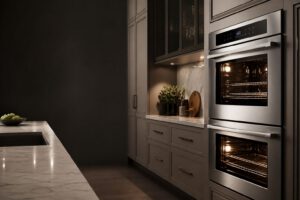
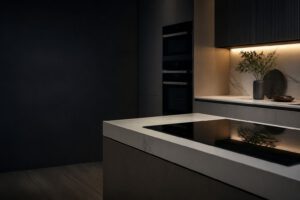
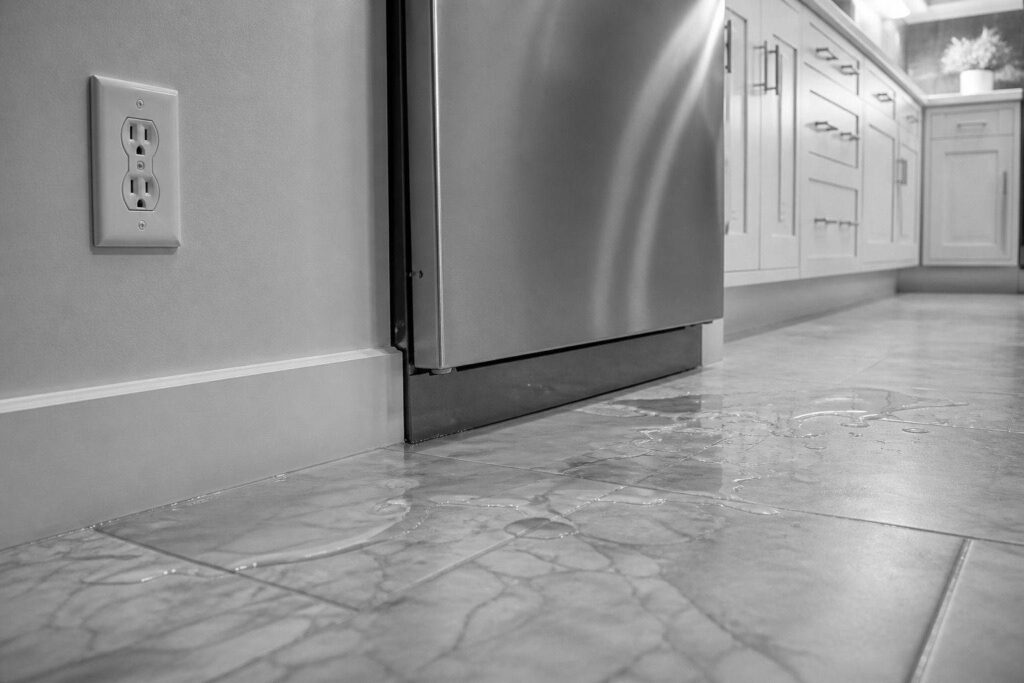
A range holds heat that is easy to underestimate. The Chateau guide advises that an induction surface can still be hot after the indicators go out, and that residual heat is shown with an H. The CornuFe guide warns that oven knobs get very hot if the door is left open. Both are cases where the safe habit is to wait rather than touch.
For fires, the guide says not to use water on a grease fire and to smother the pan with a lid instead. For an oven fire, close the door and ventilate with the hood. Do not flambe under a Chateau hood, and turn the hood on for high heat. Keep aerosol cans and flammable items off the cooktop, because hot vent air from the oven can ignite them or make cans burst.
| Warning sign |
What it can point to |
What to do right away |
| Smell of gas |
A leak, or unburned gas from a burner that did not light |
Do not use switches, flames or a phone indoors; go outside and call the gas supplier or fire department |
| Cracked induction glass |
A damaged surface that can expose electronics |
Disconnect power at the breaker and stop cooking on it |
| Flame that is long with a white tip |
A combustion problem, per the Chateau manual |
Turn the burner off and call for service |
| Front panel excessively hot during use |
A failing cooling fan, per one CornuFe guide |
Switch off, let it cool and arrange service |
| Range breaker or fuse trips repeatedly |
A fault in the range or its supply |
Leave it off and have a qualified repair person look |
| Oven door that will not open or close properly |
A latch, hinge or alignment problem |
Do not force it; book a visit |
Cooking technique carries its own cautions. The Chateau guide asks that induction cooking be stopped with the control knob rather than by relying only on pan detection. On the CornuFe cooktop, avoid unstable pans and keep to the minimum pan sizes listed in the manual, since a pan that rocks can spill hot contents onto a live burner.