Skip to content
La Cornue kitchen

Water Leaks and Electrical Risk Staying Safe

Water near cooking appliances is an electrical and slip hazard: spills into cooktops, leaks at nearby plumbing, and what to do before a visit.

At a glance

Article overview

Water Leaks and Electrical Risk: Staying Safe
Quick answer

Water near cooking appliances is an electrical and slip hazard: spills into cooktops, leaks at nearby plumbing, and what to do before a visit.

Water near the controls, under a glass top, or around the wiring side of a La Cornue range is a stop-use situation. Switch the burners and oven off, stay out of any standing water, cut power at the breaker only if the panel is dry and easy to reach, and leave the range unused until the source of the water is known. A boil-over that stayed on a dry surface is a different matter and often needs nothing more than wiping and a check that every burner part is dry.

Safety

Why is water near a range a safety question?

A range is a cooking appliance with live electrical parts, and several of them sit close to where spills happen: the knobs, the ignition system, the control section, and on induction models the electronics under the glass. One La Cornue manual notes that the range terminals are not accessible once the range is in position, and that the same manual calls for a licensed electrician when the electric service does not meet specifications. In other words, the inside of the range is not a place for homeowner drying or inspection.

The practical rule is to separate two situations. Liquid that is visible, on top, and wipeable is a cleaning job. Liquid that has gone past a gap, into a burner base, behind a knob, or under glass is a question for a qualified service provider, because nobody can see where it ended up.

Guide

Where the water usually comes from

Most events start on the cooking surface: a pot boils over, a cloth is wrung out too close to the knobs, or a spray bottle is aimed at the front panel. La Cornue cleaning guidance for its enamel panels says to use warm, mild soapy water on a microfiber cloth, dry promptly, and never spray cleaner directly onto enamel surfaces. Spray travels into seams that cannot be seen, which is exactly the path that turns a cleaning habit into an electrical concern.

Steam is a separate thing. One CornuFe dual-fuel manual says steam at the rear grille, and a puff of steam when the oven door opens, is normal when high-moisture foods are cooking. That is moisture leaving the oven, not a leak, and it is not a reason to shut the range down.

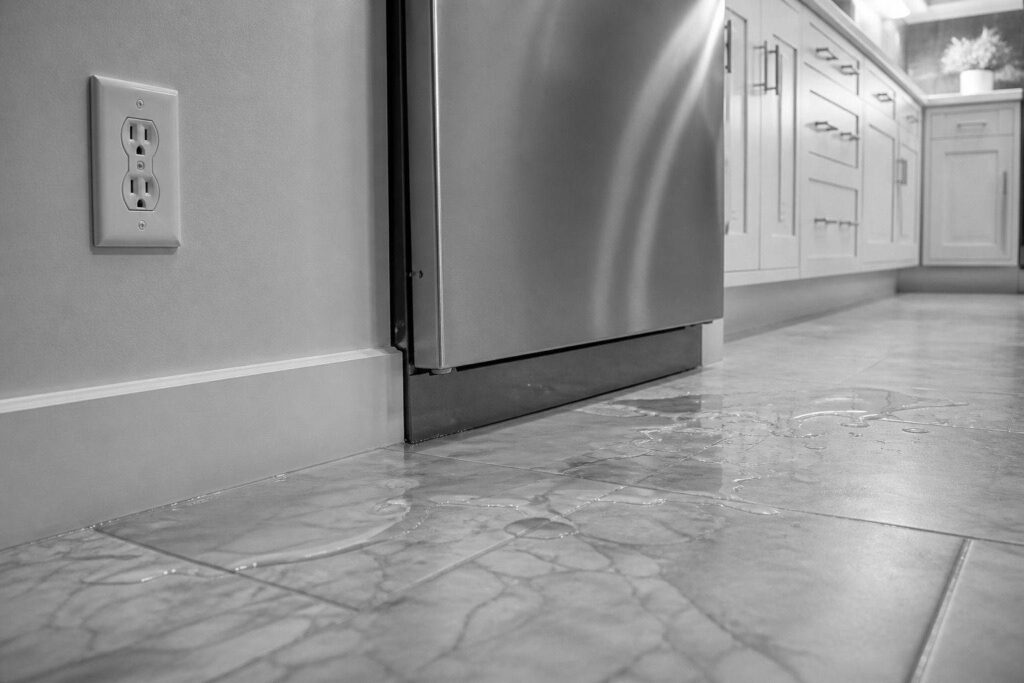
Water on the floor beside the range is a different problem. If it cannot be traced to a pot or a spill, treat it as a plumbing question first, keep the range off until the floor is dry and the source is known, and do not stand in the wet area to reach a plug or a breaker.

Guide

Water on a cooktop versus water inside the range

On gas models, one CornuFe manual says burner heads and caps must be completely dry before they go back on, and that they must locate properly in the base. A wet part forced into place can leave a burner that sparks but does not stay lit. That is a symptom to note and report, not something to push through by clicking repeatedly.

On induction models, the glass condition matters more than the amount of liquid. A Chateau manual says to disconnect power immediately if the surface cracks, and La Cornue manuals say not to cook on a broken cooktop. Liquid can reach the electronics through a crack, so a cracked top with any liquid on it should be treated as a stop-use event.

Guide

Safe steps after a wet event

  • Turn every burner and oven control off and let hot surfaces cool.
  • If the breaker panel is dry and reachable, switch the range circuit off. If it is not, leave the area and do not reach into water.
  • Wipe visible liquid from the surface with a dry microfiber cloth.
  • On gas models, lift off burner heads and caps that are accessible without tools and let them dry completely before replacing them.
  • Do not run the oven or burners to dry the range out, and do not use a hair dryer on seams or knobs.
Guide

What a dry-out does and does not prove

A display that lights up again after a wait shows only that the display works. Moisture can leave a film on contacts that behaves for a day and then trips a breaker or causes erratic control behavior. A tripped breaker after water exposure is information, not a nuisance, and switching it back on repeatedly to see whether it holds puts stress on a circuit that has already reacted to a fault. Leave it off.

The reverse is also true. A range that never shows a symptom after a wet event is not proven damaged, and a clean wipe-up of a surface spill does not call for a service visit. The deciding question is whether liquid reached anything beyond the top surface.

What you see What it can point to What you can check
Water pooled on the cooktop after a boil-over Liquid in burner bases, around knobs, or under glass Burners off, surface cool, wipe dry, leave burner parts out to dry before replacing
Burner clicks but will not stay lit after cleaning Wet or poorly seated burner head or cap Confirm the head sits in its base and parts are dry, then follow the manual lighting steps
Display dark or flickering after a spill Moisture reaching the control section Stop using the range and leave the circuit off
Cracked induction glass with liquid on it Compromised surface over electronics Disconnect power only if the panel is safe to reach; do not cook on it
Steam from the rear grille while baking Normal moisture release on some models Check your own manual; steam alone is not a fault
Guide

When should you book a visit after water reaches a range?

Book a diagnosis when liquid reached the controls or ran underneath the range, when a breaker tripped after water exposure, when the display or knobs behave differently afterward, or when glass is cracked. Have the model label, the circuit behavior, and a short account of the spill ready.

Guide

Frequently asked questions

Can I use a hair dryer to dry a range after a spill?

No. Heat and airflow can push moisture deeper into seams. Wipe the visible surface, keep the range off, and have it assessed if liquid got past the top.

Is a wet range always a repair?

No. Liquid that stayed on a dry enamel or glass surface and wiped up cleanly may need only a check that every burner part is dry and seated. Liquid that reached the controls or ran underneath needs a look before the range is used again.

Should I flip the breaker back on to test the range?

Not after a wet event that caused a trip. Repeated resets do not identify the fault. Leave the circuit off and describe the sequence when you book.

What if I smell gas and there is water around the range?

Do not light anything, do not touch electrical switches, and leave the building to call the gas supplier or the fire department from elsewhere. Do not pull the range out to look behind it.

Get started

Need help with a La Cornue appliance?

Book a La Cornue service visit for a clear estimate and approval before any repair. Specialist technicians, clear diagnostics, and workmanship coverage on completed repairs.

Keep going

Related help

FAQ

Frequently asked questions

Keep reading

Similar articles

View all articles

Get started

Ready to restore your La Cornue appliance?

Book a repair online or call us — clear estimates, approval before any work, and a workmanship warranty on completed repairs.

Book a repair

Tell us what’s wrong — we’ll take it from there

Share a few details and we’ll confirm an appointment. Prefer to talk? Call us and we’ll help right away.

Hours Mon–Sat: 8:00 AM – 7:00 PM
Service area Serving Los Angeles County and Orange County.
Response time Appointment timing depends on location, route capacity, appliance type, and parts needs.
Call Book a Repair